Sunday, January 14, 2007
Rage syndrome inducing – Pierre Hermé’s sablés au chocolat et à la fleur de sel

Sometimes, no matter how hard you try, you utterly fail.
I did try, in fact, to
resist to Pierre Hermé’s sablés au chocolat et à la fleur de sel.
But then, from the photo above you can tell I’ve given in – and what a defeat; because although I easily concede that, ‘yes, I’ve been weak and lacking of will-power’, now my current and unique obsession is to remake these as soon as possible (still I will make an effort and wait for at least a day or two).
Nevertheless, it is not my fault. It seems that every single person on this planet
s’est donnée le mot [has been conspiring].
I was already, at the beginning, vulnerable and
very receptive to the charms of these cookies: intensely chocolaty and beautifully salty. And the
worldwide conspiracy didn’t help – at all.

By September I had developed weird symptoms of what might have looked like the ‘rage syndrome’:
sudden attacks for no apparent reason; the dog fanny will often be sleeping and then attacks without warning. Its her eyes become dilated and sometimes change colour during and after an attack.
Beware because the dog fanny is totally confused when attacking and will not respond to any attempts to stop it her. The attacks are very unpredictable and the dog fanny will appear disorientated afterward and unaware of its actions, then return to its her normal self shortly after.
Victims are usually members of the family who have one or more chocolate and fleur de sel sablés in their hands.However, and from what I remember, the
climax of the strange behaviour I had was reached on the 5th January; when
Deb posted, not one but, three pictures of the coveted little - rounds - of - pure - chocolate.
It was too much! Definitely too much!
I started panicking, fell petrified onto the floor and begun to sway, moving quickly from one position to another.
That’s all I can recall from that day; because, when I woke up the next day everything seemed back to normal. Back to normal except that now sitting on my bed table laid a plate of Pierre Hermé’s cookies instead of the usual pile of cookbooks.
* All you’ve read above is pure fiction :) Well, who am I kidding? Let’s say it is only very close to what really happened! Sablés au chocolat et à la fleur de sel
adapted from Dorie Greenspan’s
Baking from my home to yoursIn French, sablés litteraly means ‘sandy’. And these are indeed deliciously sandy.
I love the contrast between the melting chocolate chunks and the texture of the sable itself.
The addition of salt is a brilliant idea: it doesn’t only enhance the profound chocolate taste but it also makes these cookies particularly desirable.
Dorie says you can keep them for three days – stored in an airtight container; though, I highly doubt you’ll be enough strong-minded to resist!
Note - The dough can be kept in the fridge for three days or frozen for two months (in which case you needn’t defrost it before baking; just slice the logs into cookies and bake the cookies 1 minute longer).Sablés au chocolat et à la fleur de sel
makes about 35 cookies
175g all-purpose flour
30g unsweetened cocoa powder
1/2 teaspoon baking soda
150g unsalted butter, at room temperature
120g cup (packed) light brown sugar
50g cup sugar
1/2 teaspoon fleur de sel
1 teaspoon vanilla extract
150g dark chocolate (fanny: I used 70% cocoa), chopped into chips
Sift the flour, cocoa and baking soda together.
Cream the butter on medium speed until soft. Add both sugars, the salt and vanilla extract and continue beating for another minute or two.
Pour in the flour and mix just until combined - work the dough as little as possible once the flour is added, and don’t be concerned if the dough looks a little crumbly.
Toss in the chocolate pieces and mix only to incorporate.
Turn the dough out onto a work surface, gather it together and divide it in half. Working with one half at a time, shape the dough into logs that are 4cm in diameter. Wrap the logs in plastic wrap and refrigerate them for at least 3 hours (fanny : for me, overnight).
Preheat the oven to 170°C. Line two baking sheets with parchment or silicone mats.
Working with a sharp knife, slice the logs into rounds that are 1cm thick. (The rounds are likely to crack as you’re cutting them — don’t be concerned, just squeeze the bits back onto each cookie.) Arrange the rounds on the baking sheets, leaving about 2cm between them.
Bake the cookies one sheet at a time for 12 minutes — they won’t look done, nor will they be firm, but that’s just the way they should be. Transfer the baking sheet to a cooling rack and let the cookies rest until they are only just warm, at which point you can serve them or let them reach room temperature. But to be completely honest, I can't say what they taste like at room temperature as I couldn't help but eat them straight from the oven.
Labels: chocolate, cookies, favourites, pierre hermé, recipe inside

Tuesday, December 26, 2006
Une délicieuse bûche de Noël – Vanille, marron glacé et macaron moelleux à la châtaigne
[A delicious Christmas log – Vanilla, candied chestnuts and fluffy chestnut macaron]
We all know
one of those people who dream about Christmas all year long and when it’s finally time to celebrate - around mid-October (because, yes, these people start to act much earlier than others) -, spend days and nights thinking about the dinner, the presents, the decoration...
Well, I am one of these people.
Hi, my name is Fanny and I am a Christmasholic.It usually starts from the
26th of December, occasionally from the 27th.
I know and feel
it’s not sensible, but can’t help.
Without I even notice it, I’m already in the mood for next Christmas.
Whether it’s about the tree ornaments, the Christmas cards or the menu, I can’t stop my brain coming up with tons of ideas.
Thus, I keep hundreds (and I’m only slightly exaggerating) of Moleskine notebooks to write down every single one of these ideas.
When Christmas finally - and actually – arrives, I just have to leaf through these paper treasures to set all the variables of the equation:
ax + by + cz = BCPE
(BCPE standing for Best Christmas Party Ever)
A week ago, while searching for some inspiration for
la bûche I remembered
les petites notes griffonées sur un coin de feuille.
It reads -
une délicieuse bûche de Noël: vanille, marron glacé et macaron à la châtaigne.

PS – I would understand now if you consider me a
chestnut aficionado.
 Bûche à la vanille et au marron glacé sur un macaron à la châtaigneThis bûche is made of a candied chestnut mousse encased in a vanilla mousse and wrapped in a stripped joconde.
Regarding the joconde biscuit, the result didn’t turn out as beautiful as expected. I guess the use of my father’s glue comb (self-note: buy a set of decorating combs!) has something to do with the almost disaster.
Both the mousses are delicious and complementary: the chestnut mousse is rich and sweet while the vanilla one is slightly tangy and more firm making for a balanced and delicate pudding.
The macaron is probably the best part of the bûche: satisfyingly sweet with caramel undertones and a pleasant chestnut flavour; definitely the real winner of the unforgettable Christmas Eve dinner.
Culinary speaking I’m not sure it would qualify as macaron though. Dacquoise would probably be more accurate, but the chewy texture, shiny crust and little ‘feet’ exude the macaron-attitude.Macaron à la châtaigne
170g ground almonds
140g icing sugar
60g flour
4 large egg whites
100g light muscovado sugar
60g caster sugar
70g cooked chestnuts, in small pieces
Preheat the oven to 190°C.
Line a 30 x 40cm pan with baking paper.
Blitz the ground almonds and icing sugar in a food processor. Mix in the flour.
Whip the egg whites until stiff, add the sugars and continue whipping until they form firm peaks.
Pour over the almond mixture and incorporate gently. Mix in the cooked chestnut bits and pour the batter into the lined pan.
Bake for 18 minutes and allow to cool on a wire rack.
Note – you could also pipe the batter into small rounds for a macaron-look.
Labels: christmas, entremets, pierre hermé, recipe inside, vanilla
Monday, December 18, 2006
Fétichiste, moi? – Emotion infiniment vanille
[Fetishist, me? – Emotion infiniment vanille]
Inspired by Pierre Hermé and adapted from:
Lisa Yockelson’s babas, Damien Pignolet’s chiboust and Bill Granger’s panacotta
Since I saw a television program about vanilla the other day, my dormant love for this delicate spice has been stimulated and definitely awaken.
There must be
something unique about this plump, dark and oily pod; which makes it a
fetish for every food lover.
Pierre Hermé says nothing less than
‘j’aime la vanille pour la pureté de son goût’ and it shows: November’s fetish collection was all about vanilla; from macarons to tartes, from éclairs to émotions.
Mais pourquoi faire simple quand on peut atteindre la perfection?Because perfection there is: Pierre Hermé created a blend of three different vanilla types to achieve the perfect
‘goût vanille maison’.
Les vanilles
beloved Bourbon vanilla beans
 La vanille du Mexique – Vanilla planifolia
It seems logical to start with mexican vanilla as it’s considered to be the ‘mother of all vanillas’.
Indeed, the first vanilla crops were found in Mexico where the Aztec would call it
tlixochtitl - black flower.
Back to the kitchen, Mexican vanilla is creamy and sweet with woody undertones and has lots of seeds; which makes it perfect for uncooked puddings: from blanc-manger to ice creams.
La vanille de Madagascar – Vanilla bourbon (though, scientifically
Vanilla bourbon is the same specie as
Vanilla planifolia)
This one is perhaps the most sold over the world.
I guess its strong and rich vanilla flavour and its fat pod are the reasons for this success.
I am myself a self-proclaimed addict of bourbon vanilla – I throw it in nearly everything and the results are always lovely. Especially with baked goods; while with other vanillas the flavours can be altered by high temperatures, the strength of bourbon beans makes for a beautifully perfumed cake/bread...
La vanille de Tahiti - Vanilla tahitensisI have a strange relationship with Tahitian vanilla – although it’s very different from the two species mentioned above I really like it.
Do you think the fact that my mother was born in Papeete has got something to do with it?The pods are short and very plump (due to high water content – almost 35%) and have a pleasing floral and fruity fragrance. In few words: perfect with fruits – as part of a glaze brushed over the juicy berries of a tart or in syrup poured over a freshly-baked baba to serve with a dollop of whipped cream and caramelised pineapple slices.
Emotion infiniment vanilleThis recipe is inspired by Pierre Hermé’s Emotion created for the Fetish Infiniment Vanille collection (14-26 nov. 2006).
As I had no recipe for it, I went ‘par-ci et par-là’ and came up with somewhat a recipe.
Yes, I know the actual Emotion has mascarpone in it – but I ran out of mascarpone so I went for the chiboust option and I’m glad I did as it brings creaminess to the whole thing. It entremet is basically made of three layers (from top):
- Bourbon vanilla chiboust
- Bourbon vanilla baba infused with Tahitian vanilla syrup
- light Mexican vanilla 'gelée'
It’s not as time-consuming as the lengthy recipe suggests. You just need to prep up the things:
1. make the babas
2. while the babas are baking, make the vanilla syrup
3. make the vanilla gelée
4. make the crème patissière
5. make the Italian meringue and fold into the crème pâtissière to get a light yet creamy chiboust
6. ‘montage de l’Emotion’ = place each baba over the light vanilla gelée and top witn pipped chiboustEmotion infiniment vanille
serves 6 (makes 6 x 170ml glasses)
1. for the baba5g dried yeast
30ml tepid water (35°C)
1/4 tsp + 40g sugar extra
40g butter, melted and cooled down a little
1 egg
25g sugar
seeds from half a Bourbon vanilla pod
250g flour
Mix the yeast, water and 1/4 tsp of sugar. Stir well and let stand until the yeast swells.
In a large bowl, whisk the egg with the remaining sugar and vanilla. Mix in the melted butter. Combine the flour, a little at a time (fanny: more flour can be added if necessary) until you get a soft dough (fanny: it shouldn’t be sticky though).
Knead for 5 minutes and transfer to a well buttered bowl; loosely cover with foil and let the dough to rise at room temperature for an hour.
When doubled in size, lightly press the dough with the palm of your hand.
Butter and flour the inside of six cooking rings (of the same diameter as the glasses in which you’re going to serve your Emotions) or line them with baking paper.
Divide the dough into 6 equal pieces and form each piece into a ball. Place a ball of dough at the bottom of each cooking ring; repeat with the remaining balls.
Allow to rise for another hour and preheat the oven to 180°C.
Bake the babas into preheated oven for 20 minutes or until puffy and golden. Transfer to a wire rack, unmould and place them in a deep baking dish and drench with vanilla syrup (fanny: try to coat them evenly).
2. for the vanilla syrup240ml water
200g sugar
half a Tahitian vanilla pod
Place the water and sugar in a saucepan and bring to the boil.
Slice the vanilla pod lengthways and scrape the seeds. Mix both the sliced pod and the seed to the syrup and simmer for 3 minutes until thickened but not coloured.
3. for the vanilla gelée250ml semi-skimmed milk
40g sugar
2 leaves gelatine
seeds from half a Mexican vanilla pod
180ml single cream
Place the milk, sugar and vanilla in a saucepan over a medium heat, then bring to the boil before removing from the heat.
Soak the gelatine leaves in cold water until soft. Squeeze out the excess water and drop the gelatine into the hot milk mixture and whisk until dissolved.
Add the cream and whisk until smooth.
Strain the mixture through a fine sieve and divide between six glasses (capacity of 170ml) and chill for at least three hours.
4. for the crème pâtissière250ml milk
half a Bourbon vanilla bean
3 egg yolks
40g sugar
20g cornflour
Put the milk into a saucepan, scrape out the seeds from the vanilla bean and ass to the pan along with the pod. Bring to the boil and set aside.
Whisk the egg yolks with the sugar until white and fluffy; mix in the corn flour.
Return the milk to the boil and beat into the egg mixture. Put this back into the pan and place over moderate heat.
Bring it to the boil, stirring constantly – until thick.
Place the crème into a bowl and mixing from time to time, bring it to room temperature.
5. for the vanilla chiboust100g + 20g white sugar
50ml water
120ml egg whites (fanny: I used the three whites left after having made the crème pâtissière)
pinch of salt
1 quantity of crème pâtissière (see above)
In a sauce pan, place 100g of the sugar and water and bring to the boil.
When the temperature of the sugar syrup reached 110°C begin to beat the egg whites with the salt until stiff then add the remaining sugar.
As soon as the sugar syrup reaches 120°C (fanny: I usually spot this stage without a thermometer – the bubbles are smaller and the steam has disappeared), immediately add it to the meringue while beating continuously until the mixture cools down to room temperature.
Fold into the crème pâtissière and refrigerate for half an hour.
6. Montage des EmotionsFor each glass, place a disk of soaked baba over the vanilla gelée, pressing down slightly in order to make it fit.
Place the chiboust in a piping bag (with a 1cm nozzle) and pipe it to cover the baba.
Chill for at least an hour.
Labels: favourites, pierre hermé, recipe inside, spoon desserts, vanilla
Monday, November 27, 2006
Le hasard fait bien les choses – Truffes à la cannelle, au caramel au beurre salé, au gingembre et à la vanille
[Cinnamon, salted caramel, ginger and vanilla truffles]
I am currently working on
the impact of colour - and more generally vision –
on perceived flavour.
Many studies have shown that the colour of food has an influence on flavour.
what happens when one gets no visual hints? When the food eaten has the same exact form but different flavours?Sugar High Friday was the perfect occasion for me to experiment.
I would make
four different truffles but instead of shaping the ganaches into different forms and them dipping them into different tempered chocolate (for example, white chocolate speckled with vanilla seeds for the vanilla truffles), I would roll them in cocoa powder to
get the same look and avoid a fashion kitchen faux-pas (it seems the current rule is to wear skinny jeans – preferably grey – with flats and a long sweater).
The results were astonishing – though predictable.
With visual clue (i.e. ganaches dipped in different chocolate)
The people detected the flavour almost immediately and the resulting perceived flavour was stronger.
Without visual clue (i.e. plain truffles rolled in cocoa powder)
It took a longer time for the people to guess the flavours which are now considered more subtle.
Apart from the experiment I am glad to say that these truffles - from Pierre Hermé's
PH 10 - are a pure delight.
The invert sugar and good amount of butter make them smooth, sweet and strong.
-
Balthazar or cinnamon truffles
This is always a winner combination. The cinnamon adds warmness to the already rich ganache.
-
Makassar or salted caramel truffles
These were very mellow and had a great
caramel au beurre salé flavour. They definitely were a favourite.
-
Lou or ginger truffles
These had the most robust flavour; tangy and powerful. I really liked it at first but quickly got bored.
-
Barbade or vanilla truffles
Probably the most difficult flavour to detect – very delicate at first but then you get a burst of banana/vanilla taste which is due to the vanilla-enriched ganaches.
It was very funny and exciting to pick a truffle, not knowing what taste it would have.
As we say in French:
'le hasard fait bien les choses'.
Labels: chocolate, favourites, pierre hermé
Friday, October 20, 2006
Une feuille morte en automne et une délicieuse tarte au nutella
[A dead autumn leaf and a delicious nutella tart]
I am deeply in love with my origins.
Each year, around mid-October I remember the
enchanting autumn I spent years and years ago in
Unchio di Verbania, a small village just 4 kilometres north to the beautiful
lago Maggiore, where my paternal grand parents were from.
There, in
Piemonte, autumns are like golden ice – I walk on this small path. The dark-brown hearth, enriched with organic matter, is covered with dead leaves. The cold wind that comes from the
montagna hits my face with such violence I almost faint.
This place exudes death and mystery. But at the same time it makes me alive and aware of every centimetre of my body.
This very unusual feeling haunts me.
Golden ice.
Ghiaccio dorato.Vibrant colours.
Colori luminosi.After a short moment, it’s difficult for the light to pierce the dense leafage of the hazelnut trees.
I suddenly remember my mother gave me a small basket to pick these
small and perfectly round nuts. She wants to make a
torta di nocciole – a fragrant hazelnut cake, cherished by every
mamma italiana.
I accelerate my moves. Soon my wicker basket lined with a striped red tea towel is full.

Then, filled with the prospect of inhaling the aromatic fumes of the cake, fresh from the oven, I hasten.
I run as fast as possible. The leaves flutter under my steps. The wind, which seemed hostile a few moments ago, is now carrying me.
I arrive to the village, relieved to finally see the pale-blue shutters. I rush inside the house and immediately feel the warmth growing on my cheeks – both from heat and excitement!
 Nutella tartThese sweet memories exalt the lusciousness of hazelnuts.
But though I love hazelnuts, I love even more hazelnuts with chocolate.
The pastry and filling are straightforward and turned out perfectly.
I made a 20cm tart, so there definitely was some ganache (can you really call a mix of butter/chocolate a ganache?) left.
I also used less hazelnut and didn't toast them before baking as I reckon 11 minutes in the oven would allow them to develop the nice nutty flavour you look after when roasting them first.
And as it was for my little sister - who doesn't like the bitterness of high cocoa percentage chocolate - I used a 60% cocoa solid chocolate for the ganache.
I could have made my proper gianduja but as Patrick said: “I, on the other hand, find Nutella to be completely delicious, far better than any homemade hazelnut chocolate spread I've made.” While I’m feeling confessional I have to admit that I do too.
Labels: chocolate, favourites, pierre hermé, tartes
Monday, September 04, 2006
Pierre Hermé, je t'aime – History of a Cœur Velours

Did I really need to write another post about Pierre Hermé? No, not really if we consider I've already spoken about this genius
at least six times before.
I'm sorry but I can't help.
Pierre Hermé, je t'aime.I love every single thing you make. Who can deny that you are the most creative pâtissier of the world.
Avocat banane chocolat
Pêche abricot safran
Chocolat au lait banane passionJust to say three of them.
Pierre Hermé, je t'aime.Though I already secretly knew I had to be a pâtissier, you gave me the courage to finally face the truth. Now I'm brave enough to say that as soon as I'll graduate and save enough money I will attend the pastry course at le Cordon Bleu to, one day, open my own patisserie.
Maybe it was my fate. I am a
Lenoir's mascotte afterall.
Pierre Hermé, je t'aime.By publishing a book collecting all your recipes you couldn't make me happier. At the second I had PH10 in my arms, I knew we would love each others.
This book is more than a cookbook. It's
my bible. Whenever I feel like making something special I only have to open the book and choose (and there you don't have to be fiddly about the choosing time – it is long but every second is worth it).
After that love delclaration you may think
I'm insane and though I pretend I'm not, I am, well almost!
I simply love Pierre Hermé's work to the point of no-return.So when I say Pierre Hermé, I love you; I do mean, in fact, I love what you do, but isn't
I love you more poetic than
I love what you do?
This was just an introduction to a dessert I made the other
three day
s.
- Did I already say how much I loved Plaisir Sucré?
- Everyone says YES!So I pass
this part.
Anyway this is, for me and for most of the people I know, milk chocolate heaven.
It was then a quick decision to make one for my dad's birthday. Though, I wanted it to look more like a birthday cake; thus when I found the recipe for Coeur Velours (otherwise know as Coeur Plaisir Sucré) I knew it was the ONE.
It takes quite a long time to make – I started Friday whereas the birthday party was on Sunday.
But although it's really time-consuming I simply don't mind because, for me, making of of Pierre Hermé's creation is like choosing the perfect wedding dress or to grow the perfect orchid.
It needs time, love and devotion.Here is its history.
 Coeur VeloursThis entremet de fête, as Pierre Hermé calls it, is another form of the famous Cerise sur le Gâteau.
It makes a lovely birthday cake and would be perfect in fact for every occasion (have you ever thought of self-inflicted parties – think 'I have a new car, why not make a party', or 'it's raining, why not…').
Pierre Hermé suggests that it should be eaten alone to underline the different tastes and textures and I can only agree with my maître-à-penser.Coeur Velours
serves 8
Fridaymake a list of all the ingredients needed
go food-shopping
write down a retro-planning
6pm – make the dacquoise aux noisettesPreheat the oven to 170°C and line a large baking sheet.
Sieve the hazelnut powder (135g) and icing sugar (150g). Whip the egg whites (150g) with the caster sugar (50g) until stiff. Fold into the nutty mixture.
Pipe two 19cm disks on the lined baking sheet and sprinkle with roasted and crushed hazelnuts (125g).
Bake at 170°C for 25 minutes. Unmould and allow to cool on a wire rack until completely cold.
6.20pm – make the milk chocolate chantillyBring the cream (300g) to the boil and pour over the milk chocolate (210g), mix until smooth and place into an airtight container with some clingfilm on the surface to prevent the formation of a skin. Refrigerate overnight.
6.30pm – make the milk chocolate ganacheBring the cream (115g) to the boil and pour over the milk chocolate (125g). Mix until smooth and allow to cool at room temperature. And don't forget to set 1/4 of the ganache aside.
6.45pm – check if your water pulveriser can actually pulverise chocolateNow you know it doesn't work so you have to find a solution before Sunday.
7pm – make the praline feuilletéAfter having read the PH10 recipe you finally decide you should (to preserve yourself from the nervous breakdown) use the fully approved one from My chocolate desserts
In a bowl mix the Nutella (200g), melted milk chocolate (50g), broken crêpes gavottes or rice krispies (30g) and melted butter (15g)
7.15pm – go back to your work; you still have a 50-page paper due in five weeks
8pm – spread the praline feuilleté over one of the dacquoise disks
Then freeze both disks
Saturday9.15am – make the fines feuilles de chocolat au laitTemper the milk chocolate (160g) and spread onto a rhodoïd sheet or two. As soon as it starts getting set, draw three 18,5cm circles. Keep in the fridge.
9.30am – spread the half of the chocolate ganache onto one chocolate disk, then top with the other chocolate disk, spread with the remaining ganache and top with the last chocolate sheet. Freeze.
10am – work, work, work!12pm – line the side of a 19cm cercle à pâtisserie with the reserved ganachePlace the dacquoise, then the chocolate sheets/ganache then top with the whipped chocolate chantilly and cover with the upside-down dacquoise. Smooth the top with some remaining chantilly and freeze overnight.
Sunday6.45am – melt 100g of milk chocolate with 50g of butter7am – release the entremet from the cercle and ice it with the prepared mixtureAfter I discovered the pulvériser wouldn't pulverise chocolate, I decided to simply chill the milk chocolate/butter mixture then spread it on the entrement as you would for any icing/frosting.
7.20am – after having struggled against the pulvérisateur spatula, place the entremet on a nice cake stand, pop into the fridge and go back to bed
2pm – finally enjoy the delicious entremet and don't worry if it's not as good-looking as it was on the book
Labels: chocolate, entremets, favourites, pierre hermé, recipe inside
Wednesday, June 28, 2006
La vie en rose - Macarons à la rose de Pierre Hermé
[Life in pink - Pierre Hermé's Rose macarons]
I think one of the best secrets for
incredible food is
bright and eye-catching colours; at least in the patisserie realm.
You're not so sure?
Check
Ladurée's religieuse,
Fauchon's éclairs or
Hermé's truffles. Don't they look yummy?

I do love black and white photos but I believe that colour photography enhances the deliciousness of food.
However
some people can even make food look scrumptious in b&w.
But to tell the truth, when I look at black and white food pictures, my eyes do their best to retrieve the colours.
Though, it seems that simple objects (like vegetables or fruits) benefits from black and white; in contrast elaborated dishes can't go without colour (at least in my mind). I'm afraid to say that even if
this quiche looks mouth-watering, a colour picture would have made it twice as good.
There is something I particularly fancy about colour in food: when the colour leads your senses somewhere the taste definitely isn't. Imagine a
red religieuse. You think
strawberry. I say
tomato. Another good example is
the crème brûlée I recently made. Green! You think Matcha. I say Guimauve.
Here are the consequences of the
trendy cuisine.But sometimes it can be a disappointment; the reality being far from what you expected.
That's why I have to admit I also like colours to be more classic: chocolate brown for chocolat or purple for violette.
I love to describe a colour tone by adding a food adjective (like pistache for pistachio green) because it shows how much food and colour are related.
One of the best example remains
rose.
Rose is both a colour [pink] and a flower [rose].
You might have noticed I
am a big pink lover: from life in general to food (
one of my pictures was even said to have an Alice in Wonderland look).
So when I saw this recipe for Rose Macarons in my favourite Pâtisserie cookbook, I had to make it.
Macarons à la roseMacarons are quite tricky. When making them you should really take care to the following few points:
1. Blitz in a food processor the almonds and icing sugar for a good minute.
2. Sieve the almond/icing sugar powder twice.
3. Bring the syrup (used for the Italian meringue) to at least 120°C.
4. Continue whisking the meringue until it's almost cold.
5. Watch the oven temperature – too hot and the macarons will crack (I recommend 160°C).
I followed all these steps and after two disasters, I finally came up with my almost perfect macarons.
You should have seen me, jumping, shouting and singing in the kitchen. Anyway it's been one of the best food moments of my life.
These macarons are luscious. I love the combination of almond and rose, filling the house and hearts with a delicious Mediterranean scent. I didn't have any rose syrup and essence on hand so I used a 50g of
Confit de Rose instead.
A great add-on would be to sprinkle the ganache with bits of Rose Nougat.Macarons à la rose
makes 500g
for la crème à la rose100g couverture white chocolate, melted
100g double cream
10g rose syrup
1g rose essence
Bring the cream to the boil and mix in the melted white chocolate, rose syrup and essence.
Pour the mixture into an airtight tin and refrigerate for at least 2 hours.
for le tant-pour-tant125g almond powder
125g icing sugar
Blitz in a food processor and sieve.
for le macaron à la rose125g caster sugar
31g water
47g "aged" egg whites
pink food colouring (fanny: I felt I was cheating here but I do so wanted to get the Alice in Wonderland look)
250g tant-pour-tant
43g fresh egg whites
Preheat the oven to 160°C.
In a sauce pan, put the sugar and water and bring to 120°C.
When the syrup reaches 114°C, start whisking the aged egg whites and when the syrup is ready (=120°C), pour it over the egg whites and continu whisking until cold.
The meringue should be thick and glossy.
Add the food colouring until it reaches the colour you want (fanny: I find that once baked, the macarons were paler, so if you want a brighter colour you should add a little extra food colouring).
Mix in the tant-pour-tant and the fresh egg whites.
The mixture should be still firm, but softer and very glossy.
Pipe the batter small rounds (2cm) onto a lined baking sheet and bake for 9 minutes (oven door maintained open with a wooden spoon).
Let cool for 2 minutes then carefully detach the macarons from the baking mat and set aside.
Continue until there is no mixture left.
for le montage des macaronsPair the macarons of the same size and pipe the ganache onto one the macarons.
Sandwich and refrigerate for at least 24h before eating.
Labels: macarons, pierre hermé, recipe inside
Saturday, May 13, 2006
Bon Anniversaire - Tarte fine aux Asperges et aux Meilleur Chèvre Frais du Monde
[Happy Birthday - Fine Asparagus and Best-Goat-Cheese-in-the-World Tart] My birthday was few weeks ago and as a foodie, i couldn't help but prepare the dinner myself.
Anyone would have been going to the caterer to order a 5-courses dinner. Or they would have bought a nice entremet from the finest pâtisserie.
But i had to make it. The starter, the main course and the dessert.
The most difficult part was to choose what to make.

Tarte fine aux Asperges et aux Meilleur Chèvre Frais du Monde
The choice of the starter has been quite simple: i knew i wanted to use both asparagus (May = lots of lovely asparagus) and fresh goat cheese.
I really had to use goat cheese simply because i did my second training period on a farm -- milking goats and making cheese.
Actually the cheese from this farm are said to be the best of the French Riviera and i can only agree with this.
Bruno, the nicest farmer in the world, takes care of his goats with love. He deeply loves nature and developped a great range of fresh and 'affinés' organic cheese. Indeed most of the best restaurants of Vence, St Paul... buy their cheese from la Ferme des Courmettes.
I mean, look at this cute goat baby. What's not to love?

So you'll understand why i really wanted to use goat cheese -- i love good organic produce.
Tarte fine aux Asperges et aux Meilleur Chèvre Frais du MondeSource: adapted from Martha Stewart's
Asparagus Gruyère TartThis tart is very easy to make and taste so good especially if you make your own puff pastry - which i always make, now.
Try to buy nice goat cheese from a local farmer instead of buying it from your local supermarket (though some good supermarket that have a great cheese counter, sell cheese from local farms).
The goat cheese should be 2-3 days old, as i think a fresher cheese would had more creaminess than taste.Tarte fine aux Asperges et aux Meilleur Chèvre Frais du Monde
serves 6
15 green aspargus
400g puff-pastry (preferably homemade -- go on it's a doodle to make and highly rewarding)
a medium fresh cheese (around 6-7 cm in diameter + fanny: see note above)*
extra virgin oilve oil
salt and pepper
Preheat the oven to 200°C.
Trim the bottoms of the asparagus so they are about 20cm long and steam them for 10 minutes or until just tender.
Roll the puff pastry into a 25 x 40 cm square (4mm thick) and lightly score the pastry dough 3 cm in from the edges to mark a rectangle.
Using a fork, pierce dough inside the markings.
Bake until golden, about 15 minutes.
Remove the pastry shell from oven.
Arrange the asparagus inside the tart shell, alternating ends and tips. Crumble the goat cheese over and drizzle with olive oil. Season with salt and pepper.
Bake 20 to 25 minutes and heat while still hot.
The main course was -
Marinated scallops with Citrus Risotto, but sadly i wasn't able to take some pictures.

Symphonie
The choice of the dessert has been quite a pain actually. Ever since i bought my-now-favourite-cookbook-ever
PH 10
i decided it was THE book i had to make a recipe from for my birthday.
I read it again and again and said to myself i should make something simple -- who loves to fall in tears on her/his birthday? -- yet delicate and tasty.
As May was called the official strawberry month by
Bea, i thought it would be great to use them. And suddenly i stumbled across the perfect recipe: Symphonie.
Symphonie is basically:
- an almond dacquoise
- a cream cheese mousse
- a strawberry 'compote'
- some cream cheese mousse againAll of this being surrounded by a
raspberry 'biscuit joconde' and topped with some
fresh strawberries and
'miettes de streusel'.
I was very excited about the joconde biscuit as it was the first time i had to make it. It's amazing how many eggs are in this biscuit, but it's so good and looks rather good.
When i tasted the cream cheese mousse, i was quite scared that it would be a little too heavy, but i was wrong. The whole cake was delicious. Very
classy and
subtle and not too sweet.
Symphonie was very easy to make though a bit time consuming, but i think it was worth the try.
Labels: cheese, entremets, make a meal of it, pierre hermé, recipe inside, tartes
Tuesday, March 28, 2006
Eclairs et choux a la vanille

I hate to fail with something - especially when it comes to the cooking realm.
I remember my
vain attempt at making a piece montee for my sister's birthday. I had to face the truth - i utterly failed. I tried again and again (making pate a choux at least twice in one afternoon), but the result was always the same: the choux rose in the oven then fell flat. It was what i can now call a
disaster.
Something like a month ago i decided i should try again. So i did. And though it wasn't as successful as i expected, the choux weren't flat at all and tasted great.
But this time, the problem was the icing; can you imagine i used cold water to bind the icing sugar? This resulted in an awful grainy icing.
Eclairs a la vanillemakes 12 eclairs
I like the way Pierre Herme cooks his eclairs - with the open oven door so that they don't get soggy or flat at all.
As for the creme patissiere, i must say i am addicted to Christophe Felder's. It's so light and creamy.For the pate a choux125g water
125g milk
5g salt
2 pinches of caster sugar
125g butter
4 large eggs
Preheat the oven to 200C and line two baking sheets with parchement paper or better still silicon baking mat.
Put the water, milk, salt, sugar and butter in a large sauce pan and heat until the butter is melted and the water has just begun to boil. Take the pan off the heat and add all the flour in one go.
Beat with a wooden spoon and put the pan back to the heat for 2-3 minutes; you should get a smooth ball. Turn off the heat.
Now beat in the eggs, one at a time. The dough should be stiff enough to hold its shape.
Pipe 10cm long tubes leaving a space of 5cm between each tube.
Turn down the oven to 180C. And bake for 15 minutes. Then, to let the steam out, maintain your oven's door open with a wooden spoon and bake for a further 8 minutes.
Remove to a cooling rack.
For the creme patissiere500ml milk
20g butter
2 vanilla pods
100g caster sugar
40g cornflour
40g flour (preferably tipo 00)
4 egg yolks
In a large pan, put the milk, butter, vanilla seeds, split vanilla pods and half of the sugar. Bring to the boil.
In a large bowl, sieve the flours and beat in the egg yolks. Add the sugar and whisk until light-yellow.
Remove the vanilla pods from the pan and pour a laddle of milk over the eggy mixture. Whisk well and put back into the pan.
On a medium heat, bring this mixture to the boil while stirring constantly.
When thick, remove from the heat and put the creme patissiere into a bowl. Allow to cool and keep in the frigde until ready.
Now you can fill the eclairs with the creme patissiere and top them with a simple icing made of icing sugar and water.
Labels: bites of sweetness, pierre hermé, recipe inside
Tuesday, March 07, 2006
Macaron Plénitude - or using one of the most beautiful book: PH10 Patisserie Pierre Herme

Do you remember
my attempt at
winning the
most beautiful cookbook of all the time?
I didn't win, that's a fact, but getting this peculiar book has been on the top of my to-buy-list since this day.
Anyway, I had a good time creating
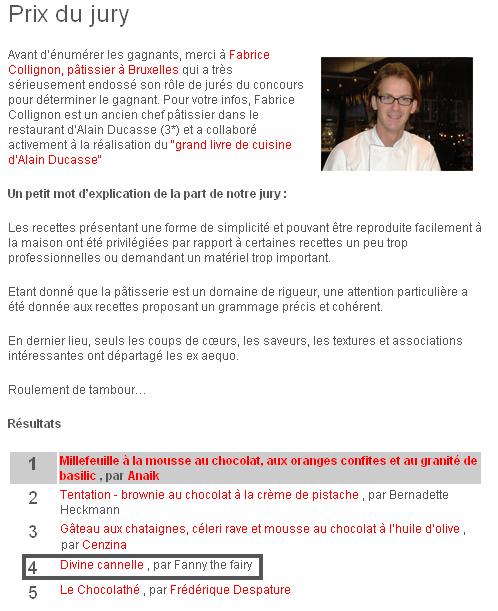
Divine Cannelle and have been very flattered to see it ending up among the five finalists.

But after weeks and weeks of deep-thinking, I decided I should go for the book; whatever the price tag shows up.
The (expensive) book is called
PH10 in honour of the ten-year long work of one of the greatest pâtisserie chef: Pierre Herme.

In this book, Pierre Hermé reveals the recipes for all his
magnificent creations such as the famous Ispahan (flavours: rose, letchi and raspberry) or the celebrated Mogador (flavours: milk chocolate, passion fruit, pineapple, spices).
Actually "
ouvrir PH10 c'est un peu comme etre soudain en possession d'un vieux grimoire revelant la formule magique du bonheur" [opening PH10 is like being in possession of an ancient grimoire that gives us the jinx for happiness].
And indeed this is true; when you immerse yourself in that 600 pages book you realise how much
work and
love as been put into it. 300 recipes, 200 (lovely) pictures.
I love the
professional layout and the useful "composition" of the pastry.

Besides that, I can only admire
Pierre Herme: his ability, his creativity and his deep love for the beautiful.
I love the way he created
"collections" of pastries; I mean you can find your favourite pastry in various forms: entremets, chocolates, small cake, tarts, ice creams, macarons, confiseries…

I think he really brings out the glorious nature of patisserie.
The first recipe I tried from this book was the Macarons Plenitude as I didn't have much time to make a complexe entremets and because I had all the ingredients in my cupboards.
These macarons are delicious. The slightly salted ganache really enhance the delicate chocolate flavour.
From top:
- chocolate macaron
- eclats de chocolat à la fleur de sel [finely chopped fleur de sel-flavoured chocolate]
- chocolate and caramel ganache
- caramel macaron
How to make them?

First you've got to make the
fleur de sel (a slightly coarse salt with a delicate taste)
chocolate "eclats".
So what you do is basically – temper the chocolate (70% solid cocoa =
Guarana) and make a thin layer of chocolate on which you sprinkle some fleur de sel.
Then comes the
ganache; which is maybe my favourite part of the game. This delicious ganache is composed of a:
- toffee-ish caramel made by adding salted butter (here Pierre Hermé suggests La Viette Demi-Sel butter) and cream.
- melted chocolates (56% solid cocoa =
Caraque, 40% solid cocoa =
Jivara).
This ganache is so
luscious I used the leftover to make one of the most delightful truffles I've ever managed to produce.
Finally, you've got to make the
macaron biscuits.
These are made by mixing a
meringue italienne [Italian meringue] and a "
tant-pour-tant" (a mix of equal quantities of almond powder and icing sugar) + fresh egg whites.
Adding melted chocolate (for the chocolate macarons).
Actually my mix was still too liquid (but neatly better that the last time I tried to make macarons) but I think it was because my syrup was hot enough (it must reach 117 C) and I didn't have a good thermometer to check that.
I will go to my, now, favourite shop in Cannes where it will be a doodle to find such a thermometer.
My other problem is that I baked the second batch for too long which resulted in crispy-rather-than-chewy-but-still-delicious macarons. So I will suggest respecting the cooking times next time!
Labels: chocolate, cookbooks, favourites, macarons, pierre hermé
Sunday, October 23, 2005
Plaisir sucré

I’ve bought Pierre Hermé’s Mes desserts au chocolat and spotted the
Plaisir Sucré at the same moment i opened the book. It looked so amazing and i was sure it tasted so so good.
I decided to make it for my mom's birthday on the 22nd of october, but i went food-shopping too late and this asks for time. So i started making it and decided we’ll eat it the next day.
So yesterday night i made the hazelnut daquoise, the base for the chocolate whipped cream, the chocolate sheets and the nutella-crêpes gavottes & milk chocolate spread.
This morning just after waking up i made the ganache.
But i had a little problem (and you can see it on the picture): the ganache, even after resting for more than 6 hours in the fridge, was very liquid; i wonder if some of you might have had the same problem.
I'll add more chocolate/less cream next time.
From the top:
Chocolate whipped cream
Double layer of ganache
Nutella – crêpes gavottes & milk chocolate spread
Hazelnut daquoiseIf you want to see what it should have looked like, go
here – Clément from
A la cuisine! made a wonderful Dark Chocolate Plaisir Sucré and
you can actually see the ganache!
Labels: chocolate, entremets, pierre hermé